
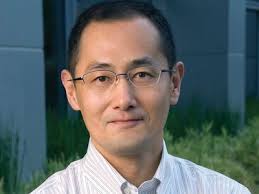

This inventor holds 41 USPTO granted patents and 18 published patent applications, plus 8 CIPO patents and 25 EPO patents, primarily in Induced Pluripotent Stem Cells. Top assignees: Kyoto University, Dainippon Sumitomo Pharma Co., Ltd., Japan Biological Informatics Consortium. Active years: 2007-2025. Nobel Prize laureate.
Data source: USPTO (United States Patent and Trademark Office) public patent records. Weekly synchronization. How IDiyas builds this profile
Location History:
- Osaka-shi JP (2007)
- Tennoji-ku, Osaka-shi, Osaka JP (2010)
- Osaka, JP (2011 - 2013)
- Kyoto, JP (2011 - 2024)
Company Filing History:
 36 out of 872
 5 out of 140
  2 out of 2

Years Active: 2007-2025
Areas of Expertise:
Title: Shinya Yamanaka: Reprogramming Cells and Innovating in Stem Cell Research
Introduction:
Shinya Yamanaka, a renowned Japanese scientist, achieved a breakthrough in 2006 when he and his team at Kyoto University successfully reprogrammed adult mouse cells into pluripotent stem cells. This groundbreaking discovery opened up endless possibilities for regenerative medicine and earned Yamanaka global recognition. This article delves into Yamanaka's accomplishments, his latest patents in the field of induced pluripotent stem cells (iPSCs), his notable career highlights, and collaborations with other researchers.
Latest Patents:
Yamanaka's extensive research and contributions to the field of stem cell biology have resulted in the filing of numerous patents. Two of his notable recent inventions include:
1. Highly Efficient Method for Establishing Induced Pluripotent Stem Cell:
This patent describes a method for producing iPSCs, involving the introduction of specific components into cells. Yamanaka's invention streamlines the process of generating iPSCs, making it more efficient and reproducible.
2. Method for Screening Induced Pluripotent Stem Cells:
Addressing the challenge of identifying iPSCs with resistance to differentiation, Yamanaka's patent outlines a method for screening such cells. By utilizing specific markers, including lincRNA or mRNA expressions, researchers can successfully identify iPSC lines that exhibit differentiation resistance.
Career Highlights:
Throughout his career, Yamanaka has achieved remarkable milestones and amassed a significant body of work. Some of his notable career highlights include:
- Joining Kyoto University: Shinya Yamanaka has been associated with Kyoto University, a renowned academic institution known for its contributions to various fields of research. His work at the university has played a pivotal role in advancing the understanding and applications of iPSCs.
- Collaboration with Dainippon Sumitomo Pharma Co., Ltd. (now Sumitomo Dainippon Pharma Co., Ltd.):
Yamanaka's collaborative efforts with Dainippon Sumitomo Pharma Co., Ltd. (now Sumitomo Dainippon Pharma Co., Ltd.) have furthered the development of practical applications of induced pluripotent stem cells. This collaboration has helped bridge the gap between academic research and commercialization of iPSC-related therapies.
Collaborations:
Yamanaka's work has often involved collaborations with fellow researchers and experts in the field. Some of the notable collaborators include:
- Kazutoshi Takahashi: A close collaborator of Yamanaka, Kazutoshi Takahashi has contributed to the development of iPSC technology. Together, they have made significant advancements and co-authored several research papers in this area.
- Keisuke Okita: Keisuke Okita has worked closely with Yamanaka on various iPSC-related projects. Their collaboration has led to new discoveries and advancements in stem cell research, expanding the field's potential applications.
Conclusion:
Shinya Yamanaka's groundbreaking research in iPSCs has revolutionized the field of stem cell biology. Through his dedication and innovative approach, he has paved the way for significant advancements in regenerative medicine. Yamanaka's latest patents focusing on efficient methods for establishing iPSCs and screening for differentiation resistance showcase his commitment to practical applications of this technology. His collaborations with fellow researchers and associations with Kyoto University and Sumitomo Dainippon Pharma Co., Ltd. exemplify his collaborative spirit in advancing the field of stem cell research.
Data source: USPTO (United States Patent and Trademark Office) public patent records. Weekly synchronization. How IDiyas builds this profile