
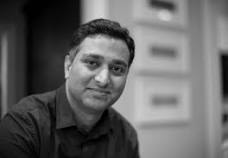
This inventor holds 133 USPTO granted patents and 5 published patent applications, plus 2 CIPO patents and 11 EPO patents, primarily in Computer Vision (CPC class G01S17-89). Top assignees: Massachusetts Institute of Technology, Mitsubishi Electric Research Laboratories, Inc., Meta Platforms, Inc.. Active years: 2003-2025.
Data source: USPTO (United States Patent and Trademark Office) public patent records. Weekly synchronization. How IDiyas builds this profile
Inventors with similar research interests:
Location History:
- Somerville, MA (US) (2003 - 2006)
- Palo Alto, CA (US) (2018 - 2023)
- Cambridge, MA (US) (2004 - 2024)
Company Filing History:
 54 out of 8,586
 49 out of 1,698
 12 out of 9,904




Years Active: 2003-2025
Areas of Expertise:
Title: Ramesh Raskar: Innovating Privacy-Preserving Neural Networks and Advanced Imaging Techniques
Introduction:
Ramesh Raskar, an accomplished Associate Professor at the prestigious Massachusetts Institute of Technology (MIT) based in Cambridge, Massachusetts, is a leading figure in the field of innovations and patents. With numerous patents to his name, Raskar has made significant contributions to the development of secure training of multi-party deep neural networks and advanced imaging techniques. Let's delve into his latest patents, career highlights, collaborations, and his overall impact on the field of technology and innovation.
Latest Patents:
Raskar's latest patents showcase his groundbreaking work in two pivotal areas: secure training of multi-party deep neural networks and improved imaging through scattering media.
1. Secure training of multi-party deep neural network:
This patent focuses on preserving data privacy while training deep neural networks involving multiple entities, Alices and Bobs. By employing a "split" neural network, the approach ensures that Bob, the outside computing entity, can assist in computations without accessing Alices' data directly. The network consists of an Alice part, comprising at least three neural layers, and a Bob part, comprising at least two neural layers. This novel architecture allows efficient collaboration while safeguarding data privacy.
2. Methods and apparatus for improved imaging through scattering media:
Raskar's second patent addresses the challenge of imaging scenes obscured by fog or scattering media. The patent proposes using a time-resolved light sensor, such as avalanche photodiodes, to collect reflected light. By leveraging a probabilistic algorithm that accounts for the different distribution of photon arrival times between the fog and the target, the imaging system obtains both reflectance and depth information of the obscured scene. Additionally, the system employs techniques like spatial and temporal regularization, as well as deblurring, to enhance the quality of the captured images.
Career Highlights:
Throughout his illustrious career, Raskar has held key positions at renowned institutions and companies. Notable highlights include his work as an Associate Professor at MIT and a research scientist at Mitsubishi Electric Research Laboratories, Inc. His expertise and contributions have not only facilitated groundbreaking research but also stimulated the progress of technology at large.
Collaborations:
Raskar's impact extends beyond his individual achievements, as he has collaborated with talented individuals in his field. Amit Agrawal and Achuta Kadambi are just a couple of his notable coworkers who have contributed significantly to their shared research endeavors. By fostering collaboration and knowledge exchange, Raskar has advanced the collective knowledge of the innovation community.
Conclusion:
Ramesh Raskar's exceptional work in secure training of multi-party deep neural networks and imaging through scattering media has propelled the field of technology forward. His patents reflect groundbreaking solutions to critical challenges, ensuring privacy and unlocking valuable insights in diverse domains. Raskar's career highlights and collaborations demonstrate his commitment to advancing technology and inspiring future generations of inventors. As an Associate Professor at MIT and a leading innovator, Ramesh Raskar continues to shape the world of innovations and patents with his remarkable contributions.
Data source: USPTO (United States Patent and Trademark Office) public patent records. Weekly synchronization. How IDiyas builds this profile