
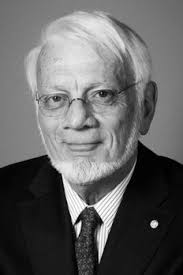

This inventor holds 10 USPTO granted patents and 3 published patent applications and 1 EPO patent. Top assignees: Yale University, Rib-X Pharmaceuticals, Inc., Melinta Therapeutics, Inc.. Active years: 2003-2014. Nobel Prize laureate.
Data source: USPTO (United States Patent and Trademark Office) public patent records. Weekly synchronization. How IDiyas builds this profile
Company Filing History:
 10 out of 1,365
 3 out of 17
  1 out of 24
Years Active: 2003-2014
Title: Thomas A. Steitz: Innovator in Ribosome Structure and Protein Synthesis Inhibitors
Introduction
Thomas A. Steitz is a prominent inventor based in Branford, CT, known for his significant contributions to the fields of biochemistry and molecular biology. With a total of 10 patents to his name, Steitz has made groundbreaking advancements, particularly in understanding ribosome structure and function. His innovative work continues to have profound implications for antibiotic development and therapeutic strategies.
Latest Patents
Among his latest inventions are methods related to ribosome structure and protein synthesis inhibitors. These inventions provide methods for producing high-resolution crystals of ribosomes and ribosomal subunits, allowing for a more detailed understanding of their architecture. Steitz's inventions also detail procedures for identifying ribosome-related ligands and designing ligands with specific ribosome-binding properties. These ligands hold potential as targeted agents that can inhibit the growth of various organisms, thereby contributing to the future of antimicrobial treatments.
Career Highlights
Throughout his illustrious career, Thomas A. Steitz has held influential positions at esteemed institutions such as Yale University and Rib-X Pharmaceuticals, Inc. His work has garnered widespread recognition and has paved the way for new research avenues in structural biology. The practical applications of his inventions in drug development have made a significant impact in medical research, particularly in combating antibiotic resistance.
Collaborations
Steitz has collaborated with noteworthy peers in the field, including Peter B. Moore and Nenad Ban, further enhancing the scope and depth of his research. These partnerships underscore the collaborative nature of scientific innovation, where combined expertise leads to significant breakthroughs.
Conclusion
Thomas A. Steitz's innovative contributions to ribosome structure and protein synthesis inhibitors reflect his status as a leading inventor in his field. His patents not only advance scientific understanding but also hold promise for developing novel therapeutic approaches. As research continues to evolve, the influence of Steitz's work is likely to resonate in the scientific community and beyond.
Data source: USPTO (United States Patent and Trademark Office) public patent records. Weekly synchronization. How IDiyas builds this profile