
Company Filing History:
 5 out of 1,732
 1 out of 8,373
 1 out of 893
Years Active: 2018-2025
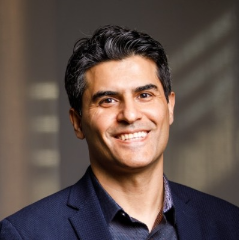
Title: **Innovator Mehdi Nikkhah: Pioneering Advances in Microtissue Engineering**
Introduction
Mehdi Nikkhah is a prominent inventor based in Scottsdale, AZ, who has made significant contributions to the field of microtissue engineering. With a portfolio of four patents, Nikkhah is at the forefront of developing innovative technologies that address major challenges in biomedical research and cancer treatment.
Latest Patents
Nikkhah's latest patents showcase his expertise in creating advanced scaffolding systems for microtissues. One of his key inventions is a "Nano scale decoration of scaffold-free microtissue using functionalised gold nanostructures." This groundbreaking invention introduces a scaffold-free microtissue that includes gold nanostructures linked to various functional moieties, such as vasculogenic and anti-inflammatory peptides, as well as cardiac myocytes that are conjugated to the nanostructures. This innovative arrangement has the potential to enhance the development of cardiac tissues for regenerative medicine.
Another notable patent is his work on "Engineering of a novel breast tumor microenvironment on a microfluidic chip." This invention provides a microfluidic device designed to more accurately model the in vitro environment of cancer. The device incorporates multiple three-dimensional scaffolds that interact with cancer cells, allowing for improved assays of anti-cancer agents and a better understanding of tumor behavior and metastasis.
Career Highlights
Throughout his career, Mehdi Nikkhah has made significant contributions to academic and research institutions. He has worked with esteemed organizations such as the Arizona Board of Regents on behalf of Arizona State University and the Massachusetts Institute of Technology (MIT). His innovative research has drawn attention and accolades within the scientific community, further cementing his role as a leading inventor in his field.
Collaborations
Nikkhah has collaborated with talented individuals like Danh Truong and Brent Vernon, sharing insights and expertise to push the boundaries of biomedical research. These collaborative efforts have fostered groundbreaking advancements, resulting in patents that hold potential for significant clinical applications.
Conclusion
Mehdi Nikkhah's commitment to innovation and research in microtissue engineering places him among the leading inventors of his generation. With a focus on developing technologies that have the potential to revolutionize cancer treatment and regenerative medicine, his contributions to the field are both impactful and inspiring. As his work continues to evolve, the scientific community eagerly anticipates the next chapter in his innovative journey.