
This inventor holds 1 USPTO granted patent. Top assignee: Exergen Corporation. Active years: 1989.
Data source: USPTO (United States Patent and Trademark Office) public patent records. Weekly synchronization. How IDiyas builds this profile
Company Filing History:

Years Active: 1989
Title: Michael W. Burke: Innovator in Radiation Detection Technology
Introduction
Michael W. Burke is a notable inventor based in Natick, MA (US), recognized for his contributions to radiation detection technology. He has been instrumental in developing innovative solutions that enhance safety and efficiency in various applications. His work at Exergen Corporation has led to the creation of a unique radiation detector that integrates temperature measurement with radiation detection.
Latest Patents
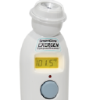
Burke holds a patent for a radiation detector with a temperature display. This device features a multicolored LED display that indicates temperature ranges, with segments colored green for 0 to 9 degrees Celsius, yellow for 10 to 19 degrees Celsius, and red for 20 to 100 degrees Celsius. The design includes audible signals that increase in frequency as the temperature rises, providing users with immediate feedback on the detected radiation levels. The detector is designed to automatically zero at ambient temperature and can operate for a predetermined length of time before shutting off.
Career Highlights
Throughout his career, Michael W. Burke has made significant strides in the field of radiation detection. His innovative approach to integrating temperature readouts with radiation detection has set new standards in the industry. His work has not only advanced technology but has also contributed to improved safety measures in environments where radiation exposure is a concern.
Collaborations
Burke collaborates with Francesco Pompei, a fellow innovator at Exergen Corporation. Their partnership has fostered a creative environment that encourages the development of cutting-edge technologies in radiation detection.
Conclusion
Michael W. Burke's contributions to radiation detection technology exemplify the impact of innovation in enhancing safety and efficiency. His patented radiation detector with temperature display is a testament to his dedication to advancing technology in this critical field.
Data source: USPTO (United States Patent and Trademark Office) public patent records. Weekly synchronization. How IDiyas builds this profile